

What Is Slow Fashion? A Guide to Effortless, Timeless Style
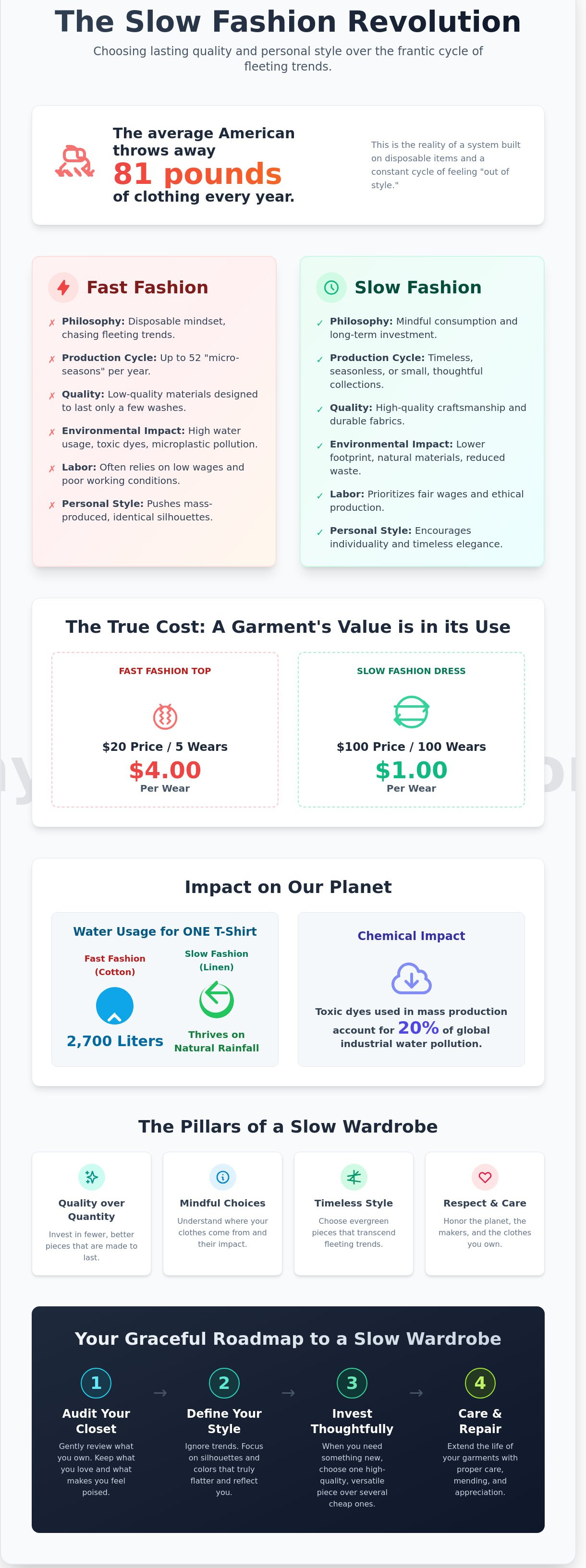
Imagine standing before a closet overflowing with 50 different items, yet feeling like you have absolutely nothing to wear for your Monday morning meeting. You've likely felt the sting of guilt when a $15 fast-fashion top loses its shape after just two washes; a common experience considering the average American throws away 81 pounds of clothing every year according to the Environmental Protection Agency. It's exhausting to chase fleeting trends that vanish before the season even changes. You deserve a wardrobe that feels like a serene sanctuary rather than a source of daily stress.
Learning exactly what is slow fashion allows you to reclaim your time and your confidence. This movement invites you to embrace quiet luxury and soft, breathable fabrics that move beautifully with you. We'll show you how to transform your closet into a curated collection of quality, grace, and enduring beauty. This guide explores the principles of intentional style and the practical steps to building a timeless wardrobe that simplifies your morning routine and honors the planet.
Key Takeaways
- Embrace a mindful approach to dressing by shifting from a disposable mindset to one of long-term quality and investment.
- Discover exactly what is slow fashion and how choosing evergreen pieces over weekly trends can protect both the planet and your personal style.
- Learn to identify the pillars of craftsmanship and gentle sophistication that ensure your garments remain beautiful for years to come.
- Follow a graceful roadmap to audit your closet and curate a wardrobe that makes you feel consistently poised and confident.
- Explore how the philosophy of quiet luxury can transform your daily attire into an effortless sanctuary of timeless elegance.
What Is Slow Fashion? Defining a Greener Way to Dress
Slow fashion is an invitation to breathe. It's a gentle approach to your wardrobe that prioritizes quality, longevity, and ethical production over the frantic cycle of trend-chasing. At its heart, what is slow fashion? It's the intentional shift from a disposable mindset to one where every garment is a long-term investment. Instead of buying a low-quality shirt that loses its shape after three washes, you choose pieces designed to last for a decade. This movement encourages a serene connection with your clothes, allowing you to dress with a sense of poise and quiet luxury.
Adopting this lifestyle means embracing the concept of "fewer, better" pieces. It's about curated elegance. When you choose fabrics like airy linen or soft organic cotton, you aren't just buying an outfit; you're investing in your own comfort and confidence. This philosophy replaces the clutter of a bursting closet with a small, thoughtful collection of items that truly move with you. It creates a morning routine defined by ease rather than stress.
The Origins of the Slower Movement
The roots of this movement trace back to 1986 in Italy. Carlo Petrini founded the "Slow Food" movement to protest the opening of a McDonald's near the Spanish Steps in Rome. He wanted to protect local food traditions and a slower pace of life. By the early 2000s, fashion researchers like Kate Fletcher began applying these principles to the garment industry. She recognized that the traditional 52 micro-seasons of fast fashion were depleting both the planet and our spirits. What began as a niche activist term has evolved into a mainstream lifestyle choice. Today, over 60% of shoppers under the age of 30 say they prefer brands that focus on durability over fleeting trends.
Slow vs. Sustainable vs. Ethical Fashion
These terms often overlap, but they represent different pillars of a conscious wardrobe. Slow fashion serves as the umbrella that makes the others possible because it focuses specifically on the pace of consumption. While ethical fashion focuses on the 75 million people working in the global garment industry, and sustainable fashion prioritizes the health of the planet, slow fashion addresses the root cause: the speed at which we buy and discard. It's the foundation of a graceful, timeless style that respects both the maker and the earth. By slowing down, you naturally support fair wages and lower carbon footprints. It's a holistic way to ensure your elegance is as kind as it is beautiful.
Slow Fashion vs. Fast Fashion: Choosing Quality Over Quantity
Many women stand before a crowded wardrobe yet feel they have nothing to wear. This frustration stems from the weekly drop culture that defines modern retail. Fast fashion brands release up to 52 micro-seasons a year, creating a constant cycle of feeling out of style. In contrast, understanding what is slow fashion means embracing an evergreen approach. It focuses on timeless pieces that remain graceful and relevant season after season, regardless of fleeting trends.
The true value of a garment is best measured through Cost Per Wear (CPW). A $20 polyester top might lose its shape or pill after five washes, resulting in a cost of $4 per wear. A $100 linen dress that maintains its beauty for 100 outings costs just $1 per wear. Quality is a thoughtful investment in your daily ease; it's the difference between a closet full of clutter and a curated collection of favorites.
The Environmental Toll of the Fast Cycle
Fast fashion is a system built on planned obsolescence and rapid turnover. By 2026, textile waste is projected to increase by 15% from 2022 levels, reaching millions of tons in landfills. Synthetic fabrics are essentially plastic; they shed microfibers into our waterways with every wash. Consider these resource differences:
- Water Usage: Producing one conventional cotton t-shirt requires 2,700 liters of water, whereas linen typically thrives on natural rainfall.
- Chemical Impact: Mass production relies on toxic dyes that account for 20% of global industrial water pollution.
- Labor Standards: Slow brands prioritize fair wages, moving away from the $3-a-day pay scales common in high-speed garment hubs.
Reclaiming Your Personal Style
Mass-produced trends often erase individuality by pushing identical silhouettes to millions of people simultaneously. When you ignore these micro-trends, you find the freedom to choose shapes that truly flatter your unique frame. A slower pace allows for more thoughtful and poised self-expression. You can build a wardrobe of effortless elegance that feels like a true reflection of your spirit. This shift is the essence of what is slow fashion; it's about choosing pieces that move beautifully with you and bring a sense of calm confidence to your morning routine.
The Core Principles of the Slow Fashion Movement
True elegance begins with a conscious choice. To understand what is slow fashion, we must look at the quiet luxury of a garment made to last. It isn't just a trend. It's a commitment to gentle sophistication. A 2023 study found that the average fast fashion item is worn only 7 times before being discarded. Slow fashion rejects this cycle. It's a poised approach that values the hands that stitch every seam. This movement stands on three non-negotiable pillars:
- Total transparency in the supply chain.
- The use of premium, earth-friendly materials.
- Fair, dignified wages for every artisan.
Transparency acts as the foundation of trust. While only 2% of global fashion brands currently pay a living wage according to 2023 industry data, slow fashion labels prioritize the human element. They share the stories of their workshops. They invite you to see the process behind the beauty.
Premium Materials and Craftsmanship
Natural fibers are the soul of a graceful wardrobe. Choosing 100% organic linen with a weight of 180 GSM ensures the piece remains opaque and breathable for years. Silk and cupro provide a soft, fluid drape that feels like a second skin. You'll notice the difference in the finishing. French seams and reinforced stitching aren't just details; they're promises of longevity. Close your eyes and feel the fabric. A carefully crafted piece has a weight and texture that mass-produced items can't replicate.
Small-Batch Production and Fair Wages
Producing in limited runs prevents the 92 million tons of textile waste created by the industry each year. When a brand chooses small-batch production, they ensure every worker operates in a safe, serene environment. It's about respect. Made-to-order models reduce inventory waste by nearly 100%. This approach guarantees that every piece has a purpose and a home. It's a thoughtful way to create beauty without excess.
Designers focus on functional timelessness. A dress doesn't just need to look good today; it must remain a staple for a decade. By ignoring the 52 micro-seasons of fast fashion, what is slow fashion becomes an invitation to effortless elegance. It's a way to build a wardrobe that feels as good as it looks. Each piece is a refined silhouette designed to move with you through every season of life.
How to Curate a Slow Fashion Wardrobe with Grace
Transitioning your closet into a sanctuary of style is a gentle process. It doesn't require a sudden purge of everything you own. Instead, it begins with a thoughtful audit of your current collection. Research from the Hot or Cool Institute in 2023 shows that the average consumer only wears 20% of their wardrobe. Identifying those pieces that make you feel poised and confident is the first step in understanding what is slow fashion on a personal level. It's a journey toward quality, not a race toward perfection.
Caring for your garments is a quiet, radical act of sustainability. Simple habits like washing at lower temperatures or air-drying can significantly prolong fabric health. A 2022 study by WRAP found that keeping a garment in use for just nine extra months reduces its environmental footprint by up to 30%. This mindful maintenance ensures your favorite pieces remain soft and elegant for years to come.
Building a Foundation: The Capsule Wardrobe
A capsule wardrobe serves as a tool for effortless elegance. By curating a small selection of versatile items, you create a sense of calm in your daily routine. You can learn more about this in our guide: What Is A Capsule Wardrobe?
- A linen dress: Choose an airy, breathable silhouette for timeless charm.
- A tailored blouse: Look for soft cotton or silk that feels gentle against the skin.
- A timeless coat: A structured wool piece offers sophisticated warmth.
- Neutral trousers: Opt for high-quality fabrics that drape beautifully.
- A classic cardigan: A refined knit adds a layer of quiet luxury.
Select a cohesive color palette. Serene shades like ivory, soft sage, and muted navy allow every piece to flow together with ease.
Shopping with Intention
Practice the "30-Wear Rule" to avoid impulse purchases. Before buying, ask yourself if you'll wear the item at least 30 times. This helps you define what is slow fashion by prioritizing longevity over fleeting trends. Take the time to research brands thoroughly. Look for transparent "About Us" pages that detail their ethical processes and material sourcing. Enjoy the joy of unhurried shopping; waiting for the perfect piece is far more rewarding than settling for a fast fashion substitute.
Ready to find your next timeless favorite? Explore our collection of graceful essentials today.
The Elegant Rose Philosophy: Effortless Elegance Made to Last
At Elegant Rose, we believe style should be a quiet conversation, not a loud demand. Our philosophy centers on grace and quiet luxury, values that sit at the very heart of what is slow fashion. We don't chase the 52 micro-seasons of the traditional fast-fashion retail calendar. Instead, we create pieces that invite a sense of calm and poise into your daily life. Our collections, such as the Azalea and Zuri lines, are designed to be timeless anchors in your closet rather than fleeting trends. We use premium linen because it's a fabric that respects both the earth and the wearer's comfort. Linen is 100% biodegradable and requires roughly 6.4 liters of water for a single shirt, while conventional cotton can demand upwards of 2,700 liters. It’s an intentional choice for a wardrobe that breathes and moves beautifully with you.
Timeless Silhouettes for the Modern Woman
The design process at Elegant Rose starts with a focus on refined silhouettes that remain elegant for decades. We avoid the "trendy" traps that lead to discarded clothing and overflowing landfills. Our soft and flowing aesthetic aligns perfectly with the slow fashion ethos, ensuring every garment feels as relevant in five years as it does today. By focusing on the way fabric interacts with movement, we ensure our pieces offer a flattering fit for every stage of life. Elegant Rose provides a sanctuary of effortless style in a fast-paced world.
A Wardrobe That Tells a Story
True sophistication isn't about the new; it's about the enduring. When you embrace what is slow fashion, you choose clothes that age with you and hold your most cherished memories. A linen dress isn't just fabric; it's the memory of a summer wedding or a quiet afternoon in the sun. Choosing gentle sophistication is a powerful sustainable choice that protects our natural resources. It directly combats the 92 million tons of textile waste produced globally each year. We invite you to slow down, breathe, and choose quality over quantity.
Embrace the Grace of a Curated Wardrobe
Choosing a more intentional path starts with understanding what is slow fashion at its heart. It's a rejection of the 52 micro-seasons produced by mass-market retailers every year. Instead, it's an invitation to invest in pieces designed to last 10 times longer than standard high-street finds. By prioritizing quality over the noise of fleeting trends, you build a wardrobe that reflects true self-assurance and quiet luxury. It's about the feeling of soft, premium fabrics against your skin and the confidence that comes from a perfectly tailored fit.
At Elegant Rose, we craft our collections with 100% breathable linen and cupro to ensure every piece feels light. Our designs focus on three core principles: timeless silhouettes, premium textures, and craftsmanship that lasts for years. We don't just make clothes; we create staples that move beautifully with you through every stage of life. It's time to step away from the cycle of disposable trends and settle into a style that's uniquely yours. You'll find that when you choose pieces made with care, getting dressed becomes an act of daily grace.
Discover Effortless Elegance in Our Timeless Collections
Your journey toward a more beautiful, sustainable lifestyle begins with a single, thoughtful choice.
Frequently Asked Questions
Is slow fashion the same as being sustainable?
Slow fashion is a holistic approach to consumption, while sustainability focuses specifically on environmental impact. While they share goals, the UN Environment Programme notes the fashion industry creates 10% of global carbon emissions. Slow fashion addresses this by reducing production speed and volume. It's a gentle shift toward quality over quantity. You'll find that choosing well-made pieces creates a more serene wardrobe that respects both people and the planet.
Why is slow fashion more expensive than high-street brands?
You're paying for fair wages and premium, natural materials that last for years. In garment hubs like Tamil Nadu, a living wage is approximately 3 times the local minimum wage. Slow fashion brands commit to these higher standards to ensure every artisan is treated with grace. Higher prices also account for small-batch production. This ensures your clothing is crafted with care rather than rushed through a factory line.
Can I still be trendy if I follow the slow fashion movement?
You can certainly stay stylish by embracing timeless silhouettes that transcend seasonal fads. In 2023, search interest for quiet luxury rose by 600%, proving that elegant, understated pieces are always in demand. Slow fashion encourages you to find your own signature style. It's about feeling poised and confident in clothes that don't expire when a new trend arrives next month. True elegance is never out of date.
What are the best fabrics to look for in slow fashion?
Seek out natural, breathable fibers like organic linen, silk, and Tencel for a soft feel. Organic linen is a standout choice because it requires only 6.4 liters of water to produce a shirt. Conventional cotton needs 2,700 liters for the same item. These fabrics offer a refined texture and move beautifully with your body. They're designed to provide effortless comfort while maintaining their integrity through many seasons of wear.
How do I know if a brand is actually 'slow' or just greenwashing?
Verify a brand's claims by looking for specific certifications and manufacturing transparency. A trustworthy brand often holds a B Corp score above 80 or uses GOTS certified organic textiles. Most slow fashion labels release fewer than 4 collections annually to avoid overproduction. If a company drops hundreds of new styles every week, it's likely greenwashing. Genuine brands share detailed stories about their artisans and factory conditions.
Does slow fashion only include minimalist or neutral styles?
Slow fashion embraces every aesthetic, from vibrant painterly florals to soft, feminine silhouettes. Market research from 2022 indicates that 45% of ethical brands now feature bold colors and intricate patterns. You don't have to sacrifice your love for beauty to practice what is slow fashion. It's simply about ensuring those beautiful pieces are made ethically and designed to stay in your wardrobe for a lifetime of joy.
How many pieces should be in a slow fashion wardrobe?
There isn't a strict rule, though many people find that 30 to 50 high-quality items create a perfect balance. The 333 Challenge, started in 2010, demonstrates that you can dress beautifully with just 33 pieces for 3 months. This curated approach brings a sense of calm to your mornings. You'll spend less time choosing and more time feeling effortlessly chic in your favorite, well-fitted garments that reflect your personal grace.
What happens to the clothes I already own if I want to switch to slow fashion?
The kindest thing you can do is continue wearing and caring for the items you already own. Research shows that wearing a garment for just 9 months longer reduces its carbon and water footprint by 30%. Understanding what is slow fashion means valuing the resources already spent. When an item finally reaches the end of its life, you can replace it with a more thoughtful, timeless piece that fits your evolving style.