

What is Flax? The Beautiful Origin of Your Favorite Linen Fabric
There is a gentle magic to linen. The way it feels against your skin-cool, breathable, and effortlessly soft. It’s a fabric that speaks of quiet luxury and timeless style. But have you ever paused to wonder about its graceful beginnings? Perhaps you've heard of flaxseed in your kitchen, but the connection to your favorite dress feels unclear. This beautiful story begins with a simple question: what is flax? It’s far more than a simple seed; it is a delicate, slender plant crowned with sky-blue flowers, holding the secret to the elegant linen you adore.
Join us as we uncover the journey of this remarkable plant. We will explore how its strong, natural fibers are transformed from a field of flowers into the timeless, breathable fabric you love to wear. You will discover why linen is not just beautiful, but a truly sustainable choice, connecting you to a story of nature, craft, and effortless elegance. By the end, you’ll not only appreciate your linen garments more deeply but also feel confident in choosing this exquisite, earth-friendly fabric.
Key Takeaways
- Discover how the graceful flax plant, with its soft blue flowers, is the true origin of your favorite linen pieces.
- Explore the two distinct gifts of the flax plant, cultivated for either its nourishing seeds or its strong, elegant fibers.
- Learn the answer to what is flax and the beautiful, natural journey it takes to become the soft, breathable linen you cherish.
- Appreciate why linen is so uniquely strong, breathable, and timeless by tracing its qualities back to the humble flax fiber.
Meet the Flax Plant: Nature’s Gift to Timeless Style
Before a garment can become an emblem of effortless elegance, it begins as a seed. For linen, that origin is the graceful flax plant, Linum usitatissimum. So, what is flax? It is nature’s own thread-a delicate flower that grows to produce one of the world’s most beloved and enduring textiles. The journey from field to fabric is a story of gentle transformation, turning a simple plant swaying in the breeze into the soft, breathable linen that feels like a second skin. Its inherent beauty and strength are not just woven into the final cloth; they are grown directly from the earth, promising a connection to nature with every wear.
A Portrait of Natural Grace
Picture a vast field under a soft summer sky, awash in a painterly sea of delicate blue or pure white blossoms. This is the flax plant in its natural element, a serene and beautiful sight. Thriving in the temperate climates of regions like Western Europe, this slender plant grows in tall, graceful stalks that can reach over three feet high. To truly meet the flax plant is to understand its purpose; its entire structure is designed to yield the long, strong bast fibers hidden within its stem. These uninterrupted fibers are the secret to linen’s renowned durability and smooth texture, a gift of structural integrity from the plant itself.
An Ancient Legacy of Elegance
The bond between humanity and flax is not a fleeting trend; it is a legacy woven through millennia. Long before the age of fast fashion, ancient Egyptians revered linen as a symbol of purity and wealth, using its fine threads to wrap pharaohs and adorn the elite. Fragments of linen have been discovered in prehistoric dwellings, dating back over 30,000 years. This enduring heritage speaks volumes about the fabric's exceptional quality and timeless appeal. When you choose to wear linen, you are draping yourself in a piece of living history-a material cherished by countless generations for its strength, breathability, and quiet sophistication. It stands as a beautiful testament to enduring style, proving that true elegance is eternal.
Ultimately, understanding what is flax is the first step in appreciating the profound beauty of linen. It is more than just a plant; it is the origin of a feeling-one of comfort, grace, and a deep connection to the natural world. From its delicate blossoms to its strong fibers, the flax plant provides the foundation for a fabric that is both luxurious and beautifully down-to-earth. This harmony between nature and elegance is what makes linen, and its humble origin, so truly special.
From Humble Seed to Golden Fiber: The Two Sides of Flax
The simple beauty of the flax plant, with its delicate sky-blue flowers, holds two distinct gifts. To truly answer the question, what is flax, we must appreciate its dual nature. It is a plant of graceful utility, cultivated for thousands of years for two very different purposes. While both come from the same family, the specific varieties are cultivated to enhance either their seeds or their stems. For a comprehensive overview of the flax plant, one can see how these two paths have shaped its journey alongside humanity. One path leads to wellness, the other to the timeless elegance of linen.
Flaxseed: A Source of Wellness
One variety of flax is grown short and bushy to maximize its seed production. Known as flaxseed or linseed, these tiny treasures are celebrated in the world of wellness for their high concentration of omega-3 fatty acids and fiber. With a gentle, nutty flavor, they are often sprinkled into yogurts and salads or pressed into a nourishing oil. This focus on deriving goodness from nature is a philosophy shared by artisans in other fields too; for example, the New Zealand-based Aroha Drinks crafts a beautiful range of beverages inspired by natural ingredients.
This same philosophy of drawing wellness from nature is seen in other traditions as well. For example, the herbal tea blends from Rastaman Stew are another great example of how botanicals are thoughtfully used for their nourishing properties.
Flax Fiber: The Soul of Linen
The other path leads to the heart of our story. A different type of flax is cultivated to grow tall and straight, with very few branches, encouraging the growth of long, uninterrupted stem fibers. These are the strong, lustrous threads hidden within the plant’s stalk-the very soul of linen. They possess a natural strength and an inner glow that translates directly into the finished cloth. These fibers are what give linen its renowned durability, its soft, breathable feel, and its effortlessly graceful drape. This is the flax of timeless fashion, a golden thread waiting to be spun into a fabric that only grows more beautiful with time.
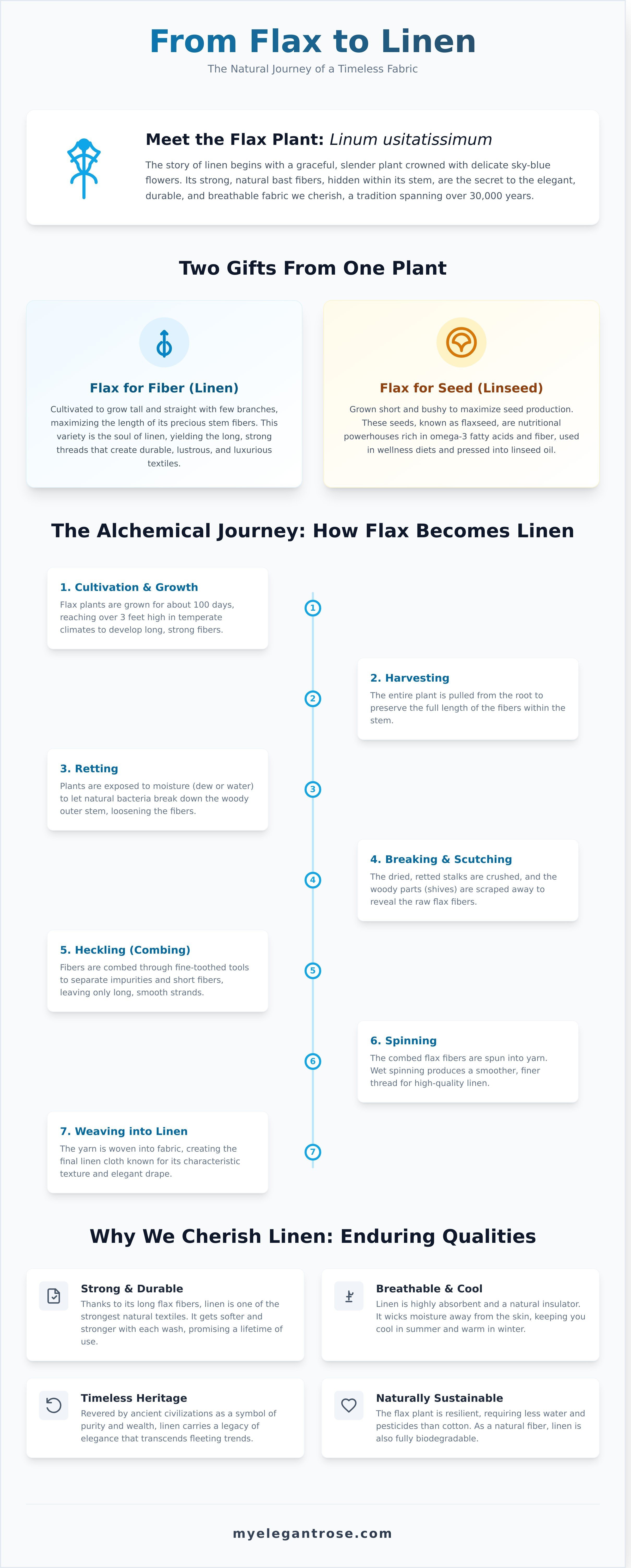
The Alchemical Journey: How Flax Becomes Linen
The transformation from a slender flax plant into the soft, breathable linen we adore is a story of patience and natural grace. It’s an ancient process, a quiet alchemy guided by skilled hands and the rhythm of nature itself. This journey reveals the true essence of the fabric, offering a deeper answer to the question, what is flax, by showing its incredible potential. It’s a testament to slow, thoughtful craftsmanship that results in a textile that is both strong and effortlessly elegant.
Harvesting and Retting: Unlocking the Fibers
The journey begins in the field, where flax is gently pulled from the earth by the root. This careful method preserves the full length of the delicate fibers, the very foundation of linen's strength and elegance. Once harvested, the stalks undergo a process called retting. This is nature's first touch, where moisture from dew or water gently breaks down the woody outer stem, revealing the soft, lustrous fibers hidden within. While our focus is on the beautiful result, the plant's lifecycle involves many fascinating horticultural and agricultural aspects that make this process possible.
Scutching and Spinning: From Straw to Thread
With the fibers revealed, the art of separation begins. Scutching is the traditional process of removing the woody straw from the soft, raw fibers. What remains is a bundle of fine, silky strands, reminiscent of pale gold hair. These fibers are then combed, or ‘heckled,’ to align them and remove impurities, preparing them to be spun. With a delicate twist, these soft fibers are transformed into strong, beautiful linen yarn, ready to be woven into the fabric we know and love.
Weaving: Creating the Fabric of Elegance
The final step in this beautiful transformation is weaving. The strong linen yarns are interlaced on a loom, creating the final textile. Different weaving techniques can produce a variety of textures, from airy, open weaves perfect for a summer day to tighter, more substantial fabrics with a smooth, luxurious feel. From a tiny seed and a delicate blue flower to a roll of timeless fabric, the journey is complete. See the beautiful result of this incredible process in our timeless linen dresses.
Why We Cherish Linen: The Enduring Qualities of Flax Fiber
From ancient fields to the modern wardrobe, the journey of the flax plant is one of quiet strength and natural beauty. Understanding what is flax at its core reveals why linen, the fabric it creates, possesses such an enduring and graceful charm. It’s a textile that offers more than just style; it provides a feeling of refined comfort and timeless poise, connecting its humble origins to its luxurious feel.
Breathable Comfort for Effortless Days
Linen is the embodiment of effortless living. Its hollow fibers allow air to circulate freely, creating a wonderfully breathable fabric that wicks moisture away from the skin. This natural quality keeps you cool and comfortable on the warmest days, allowing for a sense of graceful ease. It is this airy lightness that makes linen the perfect companion for a life lived with serene confidence.
Strength and Durability for a Timeless Wardrobe
The delicate appearance of linen belies its incredible strength. Flax fibers are among the strongest in the natural world, lending the fabric remarkable durability. Unlike other materials that wear out, linen becomes softer, smoother, and more luminous with every wash. A well-crafted linen piece is not a fleeting trend but a timeless investment, a cherished garment that only grows more beautiful with time.
A Sustainable Choice for Mindful Living
Choosing linen is a thoughtful decision that honors both personal style and the planet. The resilient flax plant requires significantly less water and fewer pesticides to grow than other crops like cotton. Furthermore, every part of the plant can be used, ensuring minimal waste. Embracing linen is an elegant expression of mindful living, a quiet luxury that feels as good as it looks.
Linen is a unique harmony of the practical and the poetic. It is strong yet soft, simple yet sophisticated. We invite you to experience the gentle luxury and effortless grace of this remarkable fabric. Explore the Elegant Rose collection and discover timeless pieces designed to flow with you through every season.
Embrace the Timeless Beauty of Flax
From its delicate blue flowers waving in a sunlit field to the strong, golden fibers hidden within its stalk, the journey of flax is one of nature’s most beautiful and enduring transformations. We've explored how this single, humble plant gives us the cherished linen fabric we adore for its breathability, strength, and graceful drape. To truly understand what is flax is to appreciate an ancient legacy of sustainable luxury, a story of patience and craftsmanship woven into every single thread.
At My Elegant Rose, we celebrate this natural legacy in every design. We believe in the quiet luxury of fabric that feels good against the skin. That is why our pieces are thoughtfully crafted from high-quality European flax, designed for timeless elegance and lasting comfort. We invite you to experience this soft, breathable magic for yourself. Discover the effortless beauty of our linen collection.
Embrace a style that is as natural and timeless as the flax from which it came.
Frequently Asked Questions About Flax and Linen
Is flax the same as linen?
While beautifully connected, they are not the same. Understanding what is flax is the first step to appreciating linen. Flax is the elegant plant with its slender stems and delicate blue flowers. Linen is the timeless, breathable fabric that is crafted from the strong, natural fibers found within the flax plant's stalk. In essence, flax is the origin, and linen is the graceful result of its transformation into a textile loved for generations.
Is flax a sustainable and eco-friendly crop?
Yes, flax is celebrated for being gentle on the earth. It is a naturally resilient plant that requires significantly less water and fewer pesticides to grow than crops like cotton. Every part of the flax plant can be used, from the long fibers for creating linen fabric to the seeds for producing oil and food. This whole-plant utility ensures minimal waste, making it a truly thoughtful and sustainable choice for a conscious wardrobe.
Why is 100% linen clothing often more expensive than cotton?
The higher price of linen reflects the careful, labor-intensive artistry required to create it. Harvesting flax to preserve the long fibers, the natural retting process to separate them, and weaving the strong, inelastic threads all demand more time and specialized skill than cotton production. This meticulous craftsmanship makes each linen piece an investment in durable, timeless quality and effortless sophistication that is designed to last a lifetime.
Does linen fabric get softer over time?
Absolutely. One of linen’s most cherished qualities is that it ages with grace, becoming softer and more supple with every wash and wear. The natural fibers relax and the weave gently loosens over time, creating a fabric that feels increasingly beautiful against your skin. This lovely evolution means your favorite linen garments don't just last; they grow more comfortable and personal, truly becoming a part of your story.
What is the difference between flax fiber and cotton fiber?
Flax and cotton fibers possess their own unique character. Flax fibers are long, smooth, and exceptionally strong, which gives linen its signature durability and crisp, cool feel. They are also highly absorbent and dry quickly. In contrast, cotton fibers are shorter and fluffier, resulting in a fabric that feels soft from the start but is less breathable and not as strong as linen. This elegant difference is why linen is so prized for warm-weather comfort.
How should I care for my linen garments to make them last?
Nurturing your linen is simple and ensures its timeless beauty. We recommend a gentle machine wash in cool or lukewarm water with a mild detergent. To preserve the fabric’s integrity, avoid bleach and high-heat tumble drying. Instead, air dry your garments on a line or flat. If you prefer a crisp finish, you can iron while the fabric is still slightly damp. This gentle care will maintain the strength and softness of your pieces for years to come.