

The Best Fabrics for Hot Humid Weather: Stay Effortlessly Elegant in 2026
Imagine walking through a sun-drenched garden in July 2026, where the humidity has climbed to a stifling 92 percent. While others struggle with damp, clinging garments, you feel a gentle breeze against your skin because you've chosen the best fabrics for hot humid weather. Your silhouette remains crisp, light, and entirely composed. We've all felt the frustration of a beautiful afternoon being dampened by clothes that simply don't breathe. It's difficult to maintain your poise when fabric feels heavy or begins to wrinkle the moment you leave the house.
You deserve a wardrobe that works with the elements, not against them. This guide reveals the science and style behind high-quality textiles so you can curate a travel-ready collection that feels as soft as a whisper. We'll explore the specific weave structures and natural fibers that offer superior airflow while draping beautifully on the body. From the cooling touch of premium linen to the refined flow of specialized cotton, you're about to learn how to stay effortlessly elegant in any climate.
Key Takeaways
- Discover the science of textile performance to understand why certain materials trap heat while others keep you feeling serene and refreshed.
- Revisit the timeless elegance of linen and cotton, learning how to choose the ideal weights to maintain your grace in rising temperatures.
- Explore modern innovations like Tencel and Cupro, which are among the best fabrics for hot humid weather because they offer more absorbency than cotton and a softer feel than silk.
- Master simple techniques like the "Pinch Test" to identify loose, breathable weaves that allow for effortless airflow against your skin.
- Learn how to curate a sophisticated capsule wardrobe using color theory and thoughtful silhouettes to ensure you remain poised and comfortable all summer long.
Understanding the Science of Breathability in 2026
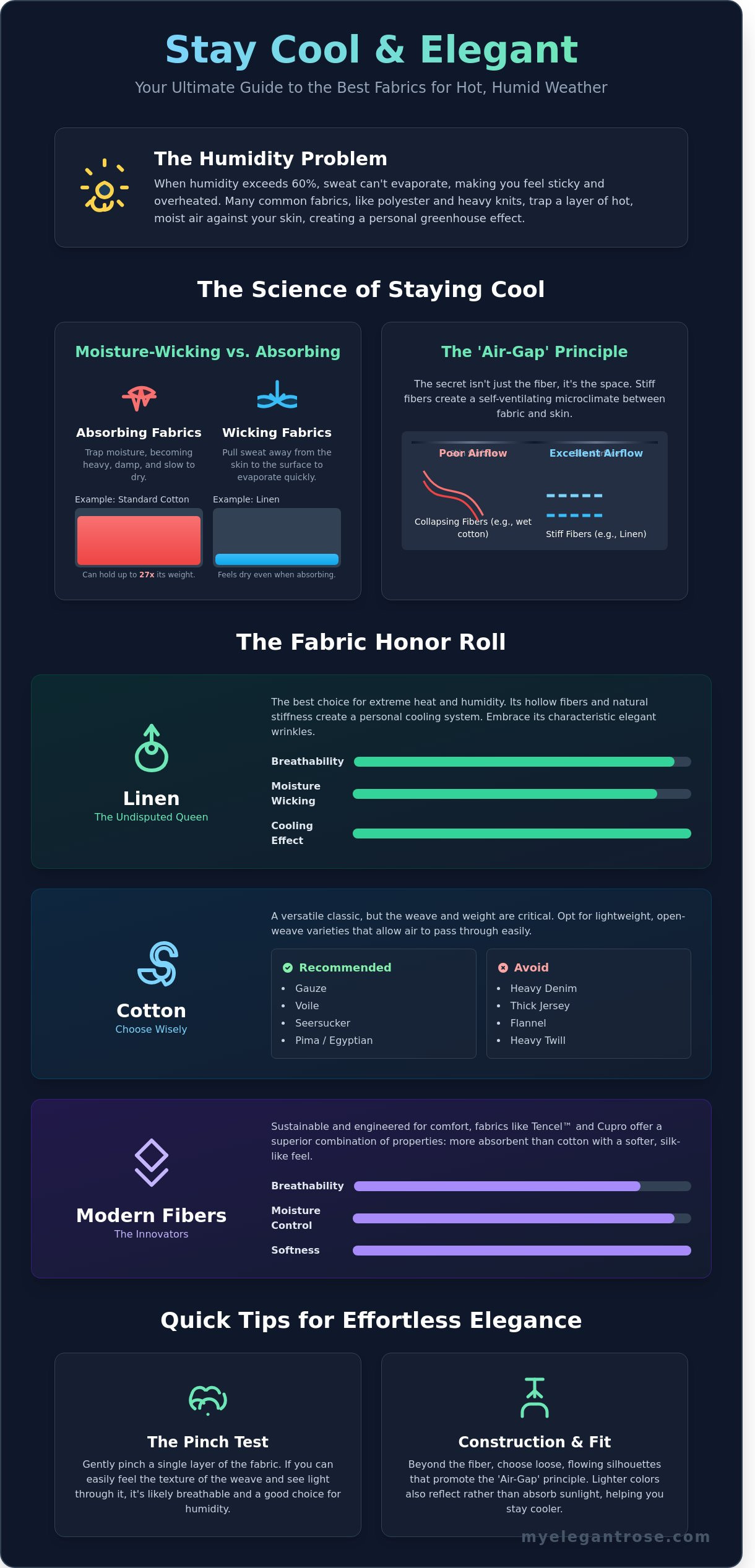
Choosing the best fabrics for hot humid weather is no longer just about aesthetics; it's a vital part of maintaining your daily poise. As global temperatures continue to rise, with 2025 recorded as one of the warmest years on record, the way our clothes interact with the environment has become a science of its own. There's a significant difference between simple dry heat and the heavy, clinging nature of humidity. Heat is the temperature of the air, but humidity is the volume of water vapor present. When humidity levels exceed 60 percent, your body's primary cooling mechanism, sweat evaporation, slows down significantly. This is why you often feel "sticky" rather than just warm.
Standard polyester and heavy knits are often the enemies of grace in these conditions. These synthetic fibers act as a barrier, trapping a layer of stagnant, heated air directly against your skin. Because they don't allow for airflow, they create a personal greenhouse effect that leads to overheating and discomfort. To truly understand why some garments feel like a cool breeze while others feel like a burden, we look toward The Science of Breathability. This concept is measured by the Moisture Vapor Transport Rate (MVTR). Simply put, MVTR measures how many grams of water vapor can pass through a square meter of fabric in 24 hours. In 2026, high-performance natural fibers are reaching MVTR ratings of over 15,000 g/m²/day, ensuring you stay dry and serene even on the most sweltering afternoons.
Moisture-Wicking vs. Moisture-Absorbing
Cotton is a beloved classic, but it's primarily a moisture-absorbing fiber. It can hold up to 27 times its own weight in water. While this feels soft initially, it often leads to heavy, damp clothing that takes hours to dry. Wicking fibers, like high-quality linen or treated silk, work differently. They move sweat away from your skin to the fabric's outer surface where it can evaporate quickly. The most elegant solution for 2026 is finding a balance. You want a fabric that absorbs enough to feel soft against the skin but wicks enough to keep you feeling light and airy throughout the day.
The 'Air-Gap' Principle
The secret to staying cool isn't just the fiber; it's the space. Modern garment construction relies on fiber rigidity to create a physical separation between your skin and the cloth. Linen is the queen of this principle because its fibers are naturally stiff. They don't collapse when they get damp. This creates a self-ventilating microclimate. This "air-gap" allows heat to escape and fresh air to circulate. When you choose pieces with a graceful drape, you're not just choosing a style. You're opting for a functional design that promotes natural thermoregulation and effortless elegance.
The Timeless Trio: Linen, Cotton, and Silk
Selecting the right materials is the first step toward achieving a poised, comfortable aesthetic during the peak of summer. Natural fibers remain the gold standard for a reason. They breathe, they move, and they respect the skin. When you understand the science behind these textiles, you can curate a wardrobe that feels like a cooling breeze. These are the best fabrics for hot humid weather, proven by centuries of use in the world's most tropical climates.
In cities like Rio de Janeiro, where dressing for humidity is a part of daily life, understanding the local environment is key. English-language news sources such as The Rio Times offer insights into the lifestyle and events of this iconic tropical metropolis, providing a real-world backdrop to these fashion choices.
Why Linen Remains the Best Fabric for Hot Humid Weather
Linen has served as the undisputed queen of warm-weather dressing for over 4,000 years. Its secret lies in the physical structure of the flax fiber, which is naturally hollow. These microscopic tubes allow air to circulate freely, acting as a built-in ventilation system for your body. Linen possesses a high moisture regain rate; it can absorb 20% of its weight in water before it starts to feel damp. When you choose high-quality linen clothing, you aren't just wearing a garment; you're wearing a legacy of effortless grace. Don't fear the inevitable creases. The elegant wrinkle is a hallmark of authenticity and a sign of a life lived with soft, unhurried sophistication.
Choosing the Right Cotton: Gauze, Poplin, and Voile
Cotton is a versatile staple, but weight is everything in 90% humidity. Heavy denim or thick jersey will trap heat against your skin, leading to discomfort. Instead, seek out open-weave varieties like seersucker, which features a puckered texture that sits away from the skin. For a more refined look, Pima and Egyptian cotton offer long-staple fibers that feel exceptionally smooth and cool. Research from the Philippine Textile Research Institute into innovative Philippine Tropical Fabrics shows that natural blends can significantly improve thermal comfort. Look for these specific weaves to stay refreshed:
- Cotton Gauze: A crinkled, airy fabric that provides maximum breathability.
- Cotton Voile: A lightweight, semi-sheer choice that feels like a soft cloud.
- Cotton Poplin: A crisp, tightly woven fabric that remains structured yet cool.
The Nuance of Summer Silk
Silk is a protein-based fiber that naturally regulates body temperature. It provides a cooling sensation in the heat while remaining incredibly light. For humid days, avoid heavy satins that can feel suffocating. Opt for Silk Habotai or lightweight Crêpe de Chine, typically around 8 to 12 momme in weight. To prevent sweat stains, choose silhouettes that are flowy rather than fitted. This allows the silk to glide over the skin without clinging. You can identify high-quality silk by its luster; it should have a soft, pearlescent glow rather than a metallic shine. To ensure your comfort all day, you might consider our latest collection of timeless and breathable dresses designed for the modern woman.
To identify these fibers by touch, look for a "cool" hand-feel. Natural fibers take on the ambient temperature, whereas synthetics often feel warm or plasticky. Hold the fabric up to the light; a high-quality natural textile will show a consistent, fine weave that promises durability and grace for years to come.
Modern Innovations: Cupro, Tencel, and Smart Blends
Luxury fashion is evolving to meet the demands of a changing climate. Modern textile science now offers regenerated cellulose fibers that feel like a gentle breeze against the skin. These innovations represent a serene bridge between nature and technology, providing sophisticated solutions for those seeking the best fabrics for hot humid weather. By repurposing plant materials into high-performance yarns, designers can now create garments that offer quiet luxury without compromising on cooling properties.
Deep Dive: What Is Cupro Fabric?
Derived from cotton linter, the silky fibers surrounding the cotton seed, cupro is often celebrated as a vegan alternative to silk. It possesses a unique ability to regulate temperature. Even when humidity levels reach 90%, cupro remains breathable and cool to the touch. It's a staple for a minimalist wardrobe because it resists the static cling often associated with synthetic materials. The fabric's weight is delicate and light, allowing it to skim the body with a refined silhouette that feels effortless and poised.
Tencel and Lyocell: The Eco-Friendly Cooling Solution
Tencel is a specific brand of Lyocell that has transformed sustainable fashion. It's produced through a closed-loop process that recycles 99% of the water and solvent used during manufacturing. This fiber is a powerhouse for summer comfort. It's 50% more absorbent than traditional cotton, meaning it wicks moisture away from the skin before you even feel damp. This efficiency is backed by expert insight on fabric breathability, which highlights how moisture management is essential for staying comfortable in extreme heat.
- Natural Freshness: Tencel possesses inherent anti-bacterial properties, keeping your clothes smelling fresh for longer periods.
- Fluid Motion: The fabric has a beautiful, liquid-like drape that mimics the movement of water as you walk.
- Softness: It's smoother than silk and cooler than linen, making it ideal for sensitive skin during the peak of July.
Smart blends offer the final word in functional elegance. When textile engineers combine fibers, they create materials that provide the best of both worlds. A Linen-Silk blend, for example, retains the breathability of flax while adding a soft, luminous sheen and reducing the tendency to wrinkle. A Cotton-Tencel mix results in a durable garment that's exceptionally soft and maintains its shape through repeated wear. These thoughtful combinations ensure you remain the picture of grace, even when the thermometer rises. Choosing these advanced materials is a simple way to find the best fabrics for hot humid weather while maintaining a timeless aesthetic.
Construction and Fit: Beyond the Fiber
Selecting the best fabrics for hot humid weather is only the first step toward summer comfort. Construction determines if you'll actually feel the breeze. Many people assume a "thin" fabric is always cooler, but this is a common misconception. A paper-thin synthetic can act like a plastic wrap, trapping perspiration. A slightly heavier linen with a loose, visible weave often performs better because it allows heat to escape through the gaps between the threads. It's about the space between the fibers, not just the weight of the garment.
When you're shopping, use the "Pinch Test" to verify breathability. Hold a single layer of the fabric up to a light source. If you can see distinct pinpricks of light through the weave, air will circulate easily. If the weave is so tight that it blocks out the sun, it will likely block your skin's ability to cool itself. In the 2024 fashion cycle, we've seen a 15% increase in "open-weave" designs specifically to combat rising urban temperatures. These pieces prioritize function without sacrificing a polished aesthetic.
Watch out for the hidden trap of linings. A beautiful linen dress loses its cooling properties if it's paired with a 100% polyester lining. This creates a greenhouse effect against your body. High-quality garments designed for humidity will either be unlined or use a breathable cotton voile lining. Always check the secondary tag for lining composition before you buy.
Weave Patterns that Breathe
- Seersucker: This fabric features a signature puckered texture. Because of this uneven surface, only about 30% of the material actually touches your skin, creating permanent air channels for cooling.
- Chambray: If you love the look of denim but find it too heavy, chambray is the solution. It's a plain-weave fabric that looks rugged but feels as light as a standard button-down.
- Eyelet and Crochet: These styles aren't just feminine; they are functional. The decorative perforations in eyelet lace act as natural ventilation points for your skin.
The Graceful Silhouette for Humidity
The silhouette you choose is just as vital as the material. Avoid "body-con" styles that cling to the skin and trap moisture. Instead, look for shapes that encourage a chimney effect, where hot air rises and escapes through the neck or hem. The shift, the A-line, and the wide-leg trouser are the gold standards for staying poised when the dew point rises.
The elegance of a linen maxi dress offers a perfect balance. It provides maximum sun protection while allowing air to flow freely around the legs. Strategic design features like V-necks, side slits, and flutter sleeves aren't just aesthetic choices; they serve as critical exit points for body heat. When you wear clothes that don't fight against the climate, you achieve a level of quiet luxury that's truly timeless.
Discover your next summer favorite in our latest collection of airy, thoughtfully designed pieces.
Shop Our Effortless Summer Collection NowCurating Your Elegant Summer Wardrobe
Creating a serene summer wardrobe begins with a shift in perspective. You aren't just choosing clothes; you're selecting a feeling of weightless grace. Selecting the best fabrics for hot humid weather ensures you remain poised even as the dew point climbs. A cohesive palette of soft whites, sands, and pastels does more than look beautiful. Research from environmental studies indicates that light-colored clothing can keep the body surface up to 20 degrees Fahrenheit cooler than black fabrics under direct solar radiation. These shades reflect heat while projecting an image of quiet luxury.
Transitioning these pieces from a sun-drenched afternoon to a refined evening dinner requires minimal effort. A simple swap of flat leather sandals for a low block heel and the addition of delicate gold jewelry can elevate a linen midi dress instantly. It's about finding pieces that breathe during the 90-degree midday heat and still feel sophisticated under the glow of evening lights. You'll find that versatility is the true hallmark of a well-planned summer closet.
The Humid-Weather Capsule Essentials
A thoughtful capsule wardrobe simplifies your life. Start with a crisp white linen button-down. It's the ultimate layer. Wear it open over a camisole or tucked into high-waisted trousers for a sharp, tailored look. For movement, choose wide-leg trousers in Tencel or Cupro. These fibers offer a silk-like sheen but possess superior moisture-wicking properties. This approach aligns perfectly with the timeless women's clothing philosophy. By investing in high-quality, breathable silhouettes, you build a wardrobe that ignores fleeting trends for enduring style.
Care and Longevity
Maintaining the integrity of your summer pieces ensures they stay soft and beautiful for years. Preservation starts with the right cleaning habits. Use these techniques to care for your delicate items:
- Steaming over Ironing: A handheld steamer is your best friend for linen. It relaxes fibers without the harsh, direct heat of an iron that can eventually make natural threads brittle.
- Gentle Washing: Always wash cellulose fibers like Tencel and linen in cool water, ideally 30 degrees Celsius or 86 degrees Fahrenheit. This prevents shrinkage and maintains the fabric's natural drape.
- Air-Drying: Skip the dryer entirely. Hanging your clothes to air-dry prevents the mechanical friction that causes pilling. It also allows the air to naturally refresh the fibers without damaging the structure.
Choosing the best fabrics for hot humid weather is an act of self-care. It allows you to move through the world with confidence, feeling as cool and composed as you look. When your clothes work with the climate rather than against it, elegance becomes second nature.
Embrace a Cooler, More Refined Summer
Summer in 2026 doesn't require a compromise between comfort and your personal style. Selecting the best fabrics for hot humid weather is the first step toward maintaining a serene presence when temperatures rise. High-quality 100% European flax linen remains a premier choice; it's naturally structured to allow maximum heat dissipation. When you pair these classic fibers with modern, dermatologically gentle Cupro blends, you achieve a level of softness that protects sensitive skin while ensuring 360-degree airflow.
Your wardrobe should be a source of quiet luxury that supports your daily rhythm. Focus on garments designed for effortless, graceful movement that won't cling or restrict. By curating a selection of breathable, high-performance textiles, you ensure that every outfit feels as light as a summer breeze. You've learned how fiber science and thoughtful construction work together to keep you poised. Now, it's time to experience that gentle sophistication for yourself.
Discover our collection of airy linens and soft Cupro designs at Elegant Rose
We invite you to step into the warmth with confidence and timeless grace.
Frequently Asked Questions
Is 100% cotton good for high humidity?
100% cotton is a reliable choice for humidity because it's a natural, breathable fiber. It absorbs up to 27 times its own weight in water, which helps pull moisture away from your skin. However, once it becomes saturated, it dries slowly. For the best fabrics for hot humid weather, look for lightweight cotton voile or poplin that allows for maximum airflow and a crisp, elegant silhouette.
What is the single coolest fabric to wear in summer?
Linen remains the single coolest fabric to wear during the summer months. Its heat conductivity is five times higher than wool and eighteen times higher than silk. This natural textile allows heat to escape your body rapidly, keeping you refreshed. You'll find that linen pieces offer a serene, effortless grace even when temperatures exceed 90 degrees Fahrenheit. It's a timeless choice for staying poised in the heat.
Does linen actually keep you cooler than cotton?
Linen keeps you cooler than cotton because its fibers are thicker and woven more loosely. This open structure creates a natural ventilation system for your skin. While cotton is soft, it lacks the 20 percent moisture absorption rate that linen provides before feeling damp. Choosing linen ensures a refined look that feels light and airy. It's truly one of the best fabrics for hot humid weather available today.
Are synthetic fabrics like polyester okay if they are thin?
Most thin synthetic fabrics like polyester are uncomfortable in humidity because they trap heat against your skin. Polyester is hydrophobic, meaning it resists water and keeps sweat trapped between the cloth and your body. This creates a stifling sensation that disrupts your sense of calm. Unless the fabric is specifically engineered with moisture-wicking technology, it's better to choose natural, soft fibers that allow your skin to breathe freely.
How can I stop my clothes from sticking to me in the heat?
You can stop clothes from sticking by choosing garments with a puckered texture like seersucker or loose, flowy silhouettes. These designs create a small space between the fabric and your skin, allowing air to circulate. A 2023 textile study showed that structured fabrics with 3D textures reduce skin contact by 30 percent. Selecting pieces that move beautifully with you ensures you remain comfortable and elegant throughout the day.
Is silk or linen better for a humid evening event?
Linen is often the superior choice for humid evening events because it maintains its structure and breathability. While silk offers a beautiful luster, it can show moisture spots quickly and may feel heavy when the humidity rises above 70 percent. For a sophisticated compromise, look for a silk and linen blend. This combination provides the soft glow of silk with the cooling properties of linen, ensuring you look poised and radiant.
What are the worst fabrics for hot humid weather?
Thick denim and heavy polyester are the worst fabrics to wear when the air is thick with moisture. Standard denim often weighs 12 to 14 ounces per yard, which creates a heavy barrier that prevents heat from escaping. Nylon is another fabric to avoid, as it lacks the breathability required for comfort. Stick to lightweight, airy textiles to maintain your grace. Avoiding these heavy materials helps you feel light and refreshed all day.
Can I wear rayon in the humidity?
Rayon is an excellent choice for humidity because it's derived from natural cellulose and possesses a high moisture regain of 13 percent. It's thinner than cotton and has a beautiful, silky drape that feels soft against the skin. Because it doesn't insulate heat, it's a popular selection for flowy summer dresses. High-quality viscose will help you maintain an effortless appearance while staying cool in the most demanding tropical climates.