

How to Stop Linen From Wrinkling: The Guide to Effortless Elegance
You step out the door at 8:00 AM in a perfectly pressed linen blazer, but by your 9:15 AM meeting, the fabric already looks like a crumpled map. It's a common struggle for the 70% of women who prioritize natural fibers but feel frustrated when their outfit looks unkempt before noon. You shouldn't have to choose between the airy comfort of flax and a polished, professional silhouette. We believe your wardrobe should move with you, maintaining its quiet luxury throughout the busiest day.
In this guide, you'll discover exactly how to stop linen from wrinkling using gentle techniques that protect your clothes. We'll show you how a simple three-minute steam technique can replace hours of traditional ironing. You'll also learn why a 30% silk or cotton blend can significantly reduce creasing while keeping that signature soft feel. By the end of this article, you'll have the tools to maintain a look of effortless elegance that lasts from your first morning coffee until the sun sets.
Key Takeaways
- Learn the essential "Golden Rule" of laundering to prevent deep creases from setting into your delicate flax fibers.
- Master professional smoothing techniques and the "Hydration Method" to discover how to stop linen from wrinkling while maintaining its soft, airy feel.
- Adopt graceful daily habits, such as the "Linen Sit," to ensure your silhouette remains poised and polished from morning to evening.
- Understand how selecting specific fabric weights and elegant botanical blends can naturally enhance your wardrobe's resistance to folds.
- Create a gentle, DIY wrinkle-releaser spray to carry in your handbag for effortless elegance and quick touch-ups on the go.
Why Does Linen Wrinkle? Understanding the Nature of Flax
Linen is a fabric of history and grace. It's woven from the stalks of the Linum usitatissimum plant, a source of beauty for thousands of years. Learning how to stop linen from wrinkling begins with a simple appreciation for the plant itself. Linen doesn't fight the world; it responds to it. This responsiveness comes from the very cells of the flax plant, which offer a unique physical profile unlike any synthetic alternative.
The Science of the Flax Fiber
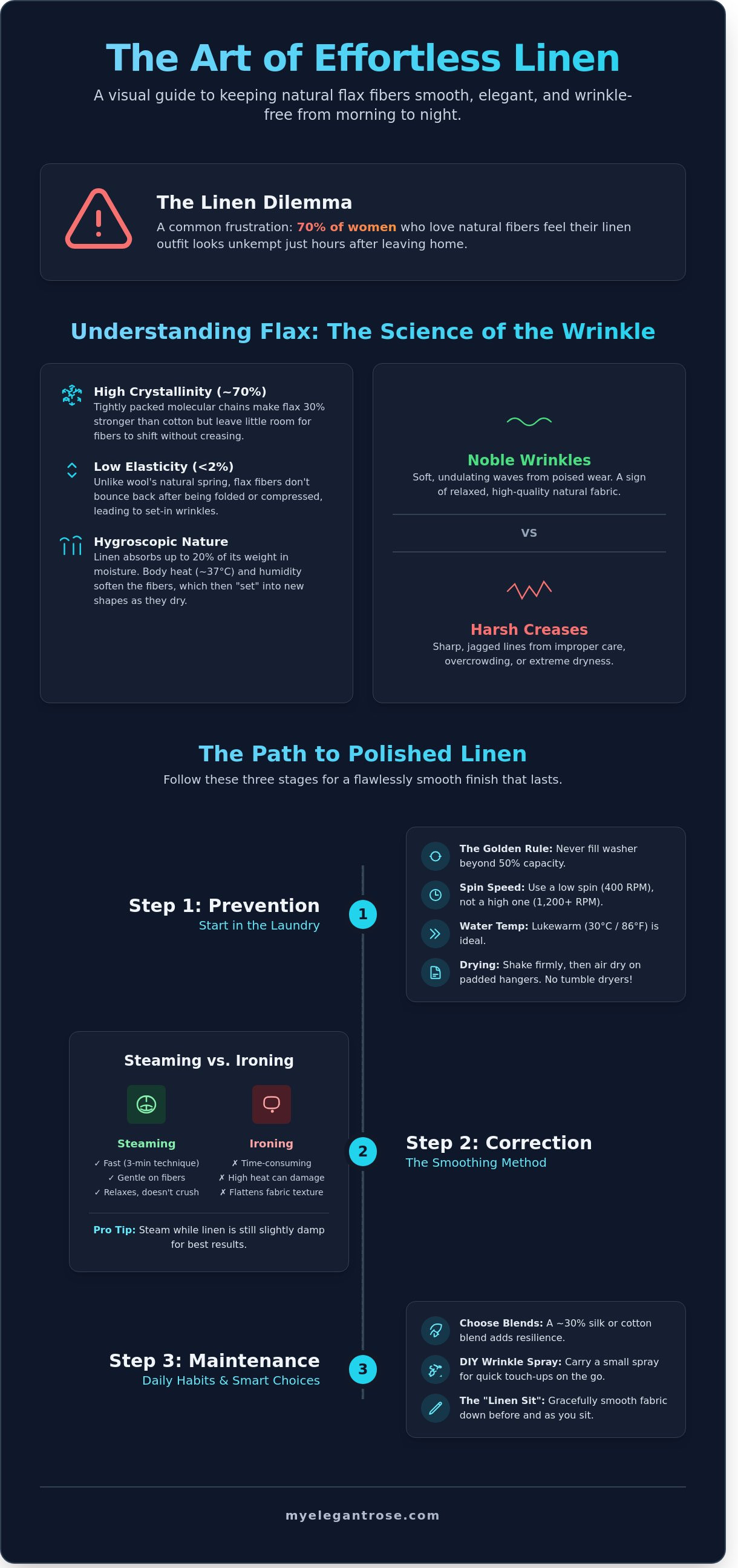
Under a microscope, flax fibers reveal a high level of crystallinity, typically measured at 70% or higher. This means the molecular chains are packed tightly and parallel to each other. While this structure makes the fabric 30% stronger than traditional cotton, it leaves very little room for the internal fibers to shift without leaving a mark. Most natural fibers, like wool, have a natural crimp that acts like a spring. Flax has an elasticity of less than 2%, meaning it doesn't "bounce back" after being folded or compressed.
This lack of stretch is exactly why a linen wrinkle is a natural hallmark of authentic, breathable fabric that lives and breathes with you. It's the visual evidence of a high-quality, natural textile.
Environmental Factors: Humidity and Heat
Your environment dictates how your clothes behave throughout the day. Human body heat, which stays around 37 degrees Celsius, acts as a gentle steamer for your clothes. This heat softens the hydrogen bonds within the cellulose, making the fabric moldable. As you sit or move, the linen shapes itself around your joints. This delicate balance is the secret to how to stop linen from wrinkling while maintaining its breezy charm.
- Hygroscopy: Linen is highly hygroscopic, meaning it can absorb up to 20% of its own weight in water before it feels damp to the touch.
- Setting the Fold: As moisture from the air or your skin evaporates, those new shapes "set" into place, creating the folds we see.
- Brittleness: When fibers are too dry, they become brittle. This causes sharp, stubborn creases instead of the soft, flowing lines associated with quiet luxury.
We often distinguish between two types of texture in our collections. Noble wrinkles are the soft, undulating waves that appear after a few hours of poised wear. They signal a relaxed, sophisticated lifestyle. Harsh creases are the sharp, jagged lines caused by improper storage or extreme dryness. By understanding the hygroscopic nature of the flax fiber, you can move from frustration to mastery. This knowledge ensures your wardrobe remains as effortless and elegant as you are.
Prevention Starts in the Laundry: Washing for Fewer Creases
The journey to a polished look begins before you ever reach for an iron. Learning how to stop linen from wrinkling starts inside your washing machine. The Golden Rule is simple: never overcrowd the drum. Linen fibers need space to move freely during the cycle. When you fill the machine beyond 50% capacity, the fabric rubs against itself, creating deep, stubborn creases that are nearly impossible to remove later. Give your garments the room they deserve to breathe and flow.
Temperature plays a vital role in maintaining the integrity of flax fibers. Lukewarm water, specifically around 30°C or 86°F, is the sweet spot for your favorite pieces. Cold water might not relax the fibers enough to release existing folds, while hot water can cause 5% shrinkage and damage the natural structure of the weave. Choose a gentle or hand-wash setting to minimize agitation. High-intensity cycles are a primary cause of those sharp, jagged lines we want to avoid.
Washing Techniques for Smooth Results
Stick to mild, liquid detergents rather than heavy powders. Powder formulas can leave microscopic residues that stiffen the fabric, making it more prone to snapping into folds when you move. If you don't want deep lines, skip the heavy spin cycle. A high-speed spin of 1,200 RPM presses the fabric against the drum with immense force, setting wrinkles into the weave. Instead, opt for a low spin of 400 RPM. For a natural touch of softness, add 125ml of white vinegar to the rinse cycle to break down mineral buildup.
The Art of Air Drying
Dryers are often the enemy of smooth linen. High heat and tumbling can bake creases into the cloth that take hours to steam out. Instead, embrace the power of gravity. Take your wet linen and give it a firm, intentional final shake to snap the fibers back into place before hanging. Place your items on wide, padded hangers. This prevents the distorted shapes caused by thin wire hangers and allows the weight of the water to naturally pull out minor folds as the garment dries.
Timing is everything when mastering how to stop linen from wrinkling. The damp-dry secret involves removing your linen from the line while it still feels cool and slightly moist to the touch, usually when it retains about 10% to 15% of its moisture. It's the perfect moment to transition to the next step of your care routine. Discovering these small rituals helps you maintain a wardrobe of effortless elegance that feels as good as it looks.
The Effortless Smoothing Method: Steaming vs. Ironing
Linen is a resilient, living fiber with a memory of its own. To master how to stop linen from wrinkling, you must first understand its relationship with moisture. The most vital rule of linen care is the "Hydration Method." Never touch a dry iron to bone-dry linen. When the fibers are completely parched, they become brittle. Pressing them in this state can cause microscopic breaks in the flax, leading to permanent creases or even holes over time.
A simple spray bottle is your most important styling tool. Linen can absorb up to 20% of its weight in moisture before it even feels damp to the touch. Mist your garment until it feels cool and slightly heavy. This moisture acts as a lubricant, allowing the fibers to relax and glide back into their graceful, original shape. It’s a gentle, nurturing approach that respects the integrity of the fabric.
- Protecting Details: Natural shell buttons or delicate resin can crack under high heat. Cover them with a small spoon or simply steam around them.
- Embroidery Care: For intricate stitching, place a plush white towel underneath the garment. Press on the reverse side to push the embroidery into the towel, preserving its three-dimensional beauty.
- The Cool Down: Always let your garment hang for at least 10 minutes after smoothing. This allows the remaining moisture to evaporate, setting the fibers in place.
Why Steaming is the Modern Choice
Steaming offers a soft, ethereal finish that preserves the fabric's natural volume. It's the preferred method for linen dresses featuring ruffles, tiers, or complex silhouettes. Unlike an iron, a steamer relaxes the weave without the crushing weight of a metal plate. While the fabric is still warm from the steam, use a "finger-pressing" technique. Gently pull the seams taut or flatten a hem with your hands. This creates a tailored look that still feels airy and effortless.
Ironing for a Polished, Crisp Finish
When an occasion calls for a more formal, structured aesthetic, the iron is your best ally. Set your device to the linen setting, which typically reaches approximately 445 degrees Fahrenheit. Always iron on the reverse side of the fabric. This prevents "fabric shine," a common issue where high heat flattens the fibers so much they reflect light unnaturally.
Use a "press and lift" motion. Avoid the traditional sliding motion used for cotton. Sliding can stretch the diagonal weave of the linen, causing the garment to lose its refined shape. By lifting the iron between sections, you lock the fibers into a crisp, smooth finish that radiates quiet luxury. Knowing how to stop linen from wrinkling through proper heat application ensures your pieces remain timeless for years to year.
How to Stay Crisp on the Go: Practical Daily Tips
True elegance isn't just about the garment; it's about how you inhabit it. Maintaining a polished look requires a few mindful habits that keep your silhouette smooth throughout the day. When you understand how to stop linen from wrinkling through intentional movement, you carry a sense of calm confidence that lasts from your morning coffee until sunset. Poise is your best tool for preserving the integrity of your favorite pieces.
Before you sit down, take a brief moment to smooth your skirt or dress against the back of your legs. This simple gesture, often called the "Linen Sit," ensures the fabric doesn't bunch or fold under your weight. For a quick refresh, keep a DIY wrinkle-releaser in your handbag. Mix 15ml of gentle fabric conditioner with 150ml of distilled water in a small spray bottle. A light misting helps fibers relax instantly. If you find creases forming at the waist, layering a soft blazer or a light knit over your shoulders can elegantly mask these focal points while adding a touch of quiet luxury to your ensemble.
Moving with Grace
When wearing linen trousers, gently pull the fabric up at the thigh before you sit. This small adjustment prevents the fabric from overstretching at the knee, which reduces bagging by up to 30% over a full day of wear. Avoid crossing your legs; this is the primary cause of deep, sharp creases that are difficult to smooth out later. If you notice a stubborn fold during a bathroom break, use the "Water Mist" trick. Lightly dampening the area with a few drops of water and smoothing it with your hands can reset the fibers in under 60 seconds.
Storage Secrets for Travel
Travel requires a strategic approach to packing. The "Rolling Method" is a favorite for frequent travelers because it eliminates the hard pressure lines caused by flat folding. Data suggests that placing acid-free tissue paper between layers of linen can reduce friction-based wrinkling by 25% during transit. Once you arrive at your destination, hang your pieces in the bathroom while you take a warm shower. The steam acts as a natural relaxant for the fabric, allowing it to hang beautifully without the need for a heavy iron.
By the afternoon, your linen will develop a soft, lived-in character. This isn't a flaw; it's a hallmark of high-quality, breathable fabric. This gentle texture represents a day well-spent in comfort and style. To find pieces that move as beautifully as you do, explore our collection of effortless linen dresses designed for the modern woman.
Curating Your Wardrobe: Choosing Wrinkle-Resistant Linen
Selecting the right fabric is the most effective strategy when you want to know how to stop linen from wrinkling before you even leave the house. Not all flax is created equal. A heavy-weight linen, typically exceeding 240 grams per square meter, possesses a natural gravity. This weight allows the garment to drape away from the body, using its own mass to pull out minor surface tension. While lightweight linens are airy, they lack the structural integrity to resist deep, sharp creases during a long day of wear.
The beauty of modern textile engineering lies in the blend. Integrating silk or cotton with flax creates a smoother hand and added resilience. A 30% silk blend introduces a soft luster and a "memory" to the fibers, helping the garment bounce back after sitting. These blends offer a sophisticated solution for those seeking the breathable luxury of flax without the maintenance of pure fibers. Choosing high-quality linen clothing ensures your wardrobe remains poised and polished, regardless of your schedule.
Identifying Quality Weaves
Quality begins with the weave density. High-end linen usually features a thread count of 40 to 50 threads per inch. This tight construction prevents the "baggy elbow" effect where the fabric over-stretches and fails to recover. Look closely at the "slub," which are the slight lumps in the yarn. In premium garments, these are subtle and consistent. Cheap alternatives often have irregular, thick slubs that act as breaking points for the fiber, leading to more permanent wrinkling. Most luxury manufacturers also employ a pre-washing process at 60 degrees Celsius. This stabilizes the fabric, ensuring the fit you buy is the fit that stays.
Embracing the Elegant Rose Aesthetic
Our design philosophy centers on the concept of "flow." We curate silhouettes that work with the natural movement of the fabric rather than fighting against it. By choosing relaxed, refined shapes, we minimize the friction and pressure that cause deep crushing. A well-designed linen dress shouldn't feel restrictive; it should feel like a second skin that breathes with you. This thoughtful approach to tailoring is central to our latest timeless women’s clothing collections. We invite you to explore pieces that celebrate effortless beauty.
Linen is a living fabric. It's a material that evolves, softening with every wash and becoming more beautiful over time. When you understand how to stop linen from wrinkling through smart curation, you stop seeing creases as a flaw. Instead, they become a gentle reflection of a life well-lived, full of movement, grace, and quiet luxury. It's a choice for the woman who values comfort as much as she values an elegant, enduring aesthetic.
Step Into a World of Effortless Grace
Mastering how to stop linen from wrinkling transforms this ancient fabric from a chore into a daily luxury. You've learned that prevention begins in the laundry room by washing at 30 degrees Celsius on a gentle cycle to reduce mechanical stress. By choosing to steam your garments instead of using a traditional iron, you preserve the natural integrity of the fibers while achieving a smoother finish. These simple adjustments ensure your favorite pieces retain their poise from morning meetings to sunset dinners.
True sophistication starts with the quality of the material itself. At My Elegant Rose, we source premium flax fibers to create garments that celebrate gentle sophistication. Our pieces are designed for graceful movement; they feature timeless silhouettes that flatter every form. When you choose quality craftsmanship, you spend less time worrying about creases and more time feeling confident. We invite you to explore our collection of effortlessly elegant linen wear and experience the difference of refined comfort. Your wardrobe deserves to feel as serene and beautiful as you do every single day.
Frequently Asked Questions
Can you ever truly stop linen from wrinkling?
You can't entirely stop linen from wrinkling because the natural flax fibers lack the elasticity found in wool or synthetic materials. These organic fibers contain approximately 70 percent cellulose, which creates a rigid structure that folds when you move or sit. Instead of fighting the fabric, most stylists suggest embracing these soft lines as a hallmark of authentic, high-quality linen. It's a natural part of the fabric's effortless charm and breathable soul.
Is it better to steam or iron a linen dress?
Ironing is the superior choice when you want a crisp, polished finish for a formal event. For the best results, use a heavy steam iron set to 445 degrees Fahrenheit while the fabric is still 10 percent damp. This high heat effectively relaxes the stubborn flax bonds. If you prefer a softer, more ethereal drape for a casual afternoon, a handheld steamer works beautifully to release the deepest folds without flattening the fabric's natural texture.
Does higher quality linen wrinkle less than cheap linen?
High-quality linen often recovers from creasing much better than lower-grade versions. Premium European Flax certified linen uses long, continuous fibers that create a resilient weave, whereas cheaper fabrics often use short, brittle fibers that snap and fold easily. A heavier weight fabric, typically 160 grams per square meter or more, also holds its shape more effectively. Investing in quality ensures your silhouette remains refined and poised throughout the day.
How do I get wrinkles out of linen without an iron?
You can remove most creases by hanging your garment in a bathroom for 15 minutes while running a hot shower. The ambient steam permeates the fibers and allows them to relax naturally without direct heat. Another practical tip for how to stop linen from wrinkling while traveling is to mist the fabric lightly with a mixture of 95 percent water and 5 percent fabric softener. Smooth the damp fabric with your hands and let it air dry for a fresh, unhurried look.
Should I starch my linen clothes to keep them crisp?
Starching your clothes is an excellent way to maintain a sharp, sophisticated appearance for longer periods. A light application of natural cornstarch spray adds a thin protective layer that can reduce deep creasing by 30 percent during an 8-hour workday. This extra structure helps the fabric resist the heat and humidity that usually cause linen to limp. It's a simple step that preserves the garment's graceful lines and keeps you looking put together from morning to evening.
Is linen-blend fabric better for preventing wrinkles?
Linen blends are significantly more resistant to wrinkling than 100 percent pure linen. A blend featuring 55 percent linen and 45 percent cotton or rayon combines the airy feel of flax with the flexible recovery of other fibers. This composition is a secret weapon for how to stop linen from wrinkling during long commutes or flights. These pieces require much less maintenance while still providing the timeless, soft aesthetic that defines a sophisticated wardrobe.
How should I store my linen clothes to avoid creases?
Store your linen pieces on wide, padded hangers to prevent the sharp shoulder puckers caused by thin wire alternatives. You should leave at least 2 inches of space between every item in your closet to ensure the fabric can breathe and won't be crushed by neighboring clothes. If you're storing items for the season, avoid plastic bins; use cotton garment bags instead. This allows the 100 percent natural fibers to maintain their integrity and stay beautiful for years.