

How to Care for Linen Clothing: The Complete Guide to Effortless Longevity
What if your favorite linen dress didn't just survive the wash, but actually became softer and more beautiful with every cycle? It's a common fear that one wrong setting might shrink a cherished piece by two full sizes or leave it permanently creased. Many women struggle with how to care for linen clothing because they worry about losing that original, graceful fit. You likely appreciate the airy, breathable nature of these natural fibers, yet the thought of maintenance feels daunting. We understand that hesitation. You want a wardrobe that reflects a sense of quiet luxury without the stress of complicated upkeep.
Mastering these gentle techniques is simpler than you might think. By following expert-led steps, you can ensure your garments maintain their elegant silhouette for a lifetime. In fact, quality linen can last for 20 years or more when treated with the right touch. This guide will show you how to preserve that soft texture and achieve effortless longevity. We'll walk through the best detergent choices, safe machine settings, and the simple secrets to air-drying your pieces to perfection.
Key Takeaways
- Embrace the enduring beauty of natural flax and learn how mindful care transforms your pieces into softer, more lustrous wardrobe staples.
- Follow our gentle washing guide to protect delicate details and prevent dye transfer, ensuring your collection remains vibrant and fresh.
- Master the "Shake and Reshape" technique to maintain a refined silhouette while learning how to care for linen clothing without the damage of tumble drying.
- Guard your garments against lasting marks with gentle stain removal secrets that utilize natural solutions to preserve fabric integrity.
- Implement the "Space and Air" storage rule to keep your structured pieces poised, airy, and ready for their next elegant outing.
Understanding the Nature of Linen: Why Care Matters
Linen is one of the world's most resilient and storied fibers. It's harvested from the stalks of the flax plant, a crop that has been cultivated for over 30,000 years according to archaeological findings. Unlike synthetic fabrics that often degrade or pill with every cycle, high-quality linen clothing actually improves as it ages. With each proper wash, the natural pectin that binds the fibers dissolves slightly. This process leaves the fabric softer, more supple, and more lustrous than the day you bought it. Learning how to care for linen clothing isn't just about laundry; it's about preserving a piece of nature that's designed to last for decades.
The "Living Fabric" Philosophy
We call linen a living fabric because of how its molecular structure responds to the environment. The hollow, tube-like fibers allow for exceptional breathability, holding up to 20% of their weight in moisture before feeling damp to the touch. This organic responsiveness makes it the foundation of a timeless women’s clothing collection. It moves gracefully with your body, adapting to your temperature and shape throughout the day. Flax is also naturally hypoallergenic and resistant to bacteria; it's a sustainable choice that feels as good on the skin as it does on the conscience. It's a fabric that rewards your touch with a soft, enduring flow.
Common Misconceptions About Linen Care
Many believe that linen is fragile or requires professional dry cleaning. This is a common myth that prevents people from enjoying its full potential. In fact, the harsh chemicals used in dry cleaning can weaken the flax fibers over time, leading to premature wear. Another common fear is the presence of wrinkles. While linen does crease, these are "noble" creases that signify the fabric's natural origin and high quality. The real enemy of linen is excessive heat. Water temperatures exceeding 40 degrees Celsius or high-heat dryer settings can cause the fibers to become brittle and snap. When you master how to care for linen clothing, you'll find that its signature texture is a mark of effortless sophistication.
- Durability: Linen is 30% stronger than cotton, allowing it to withstand years of frequent wear.
- Softness: Proper washing breaks down the natural waxes in the fiber, increasing comfort with every use.
- Longevity: Avoiding harsh detergents prevents the "brittleness" that can cause fine threads to break.
- Sustainability: Flax requires 60% less water to grow than cotton, making your care routine part of a larger eco-conscious lifestyle.
The Art of Washing: A Gentle Step-by-Step Guide
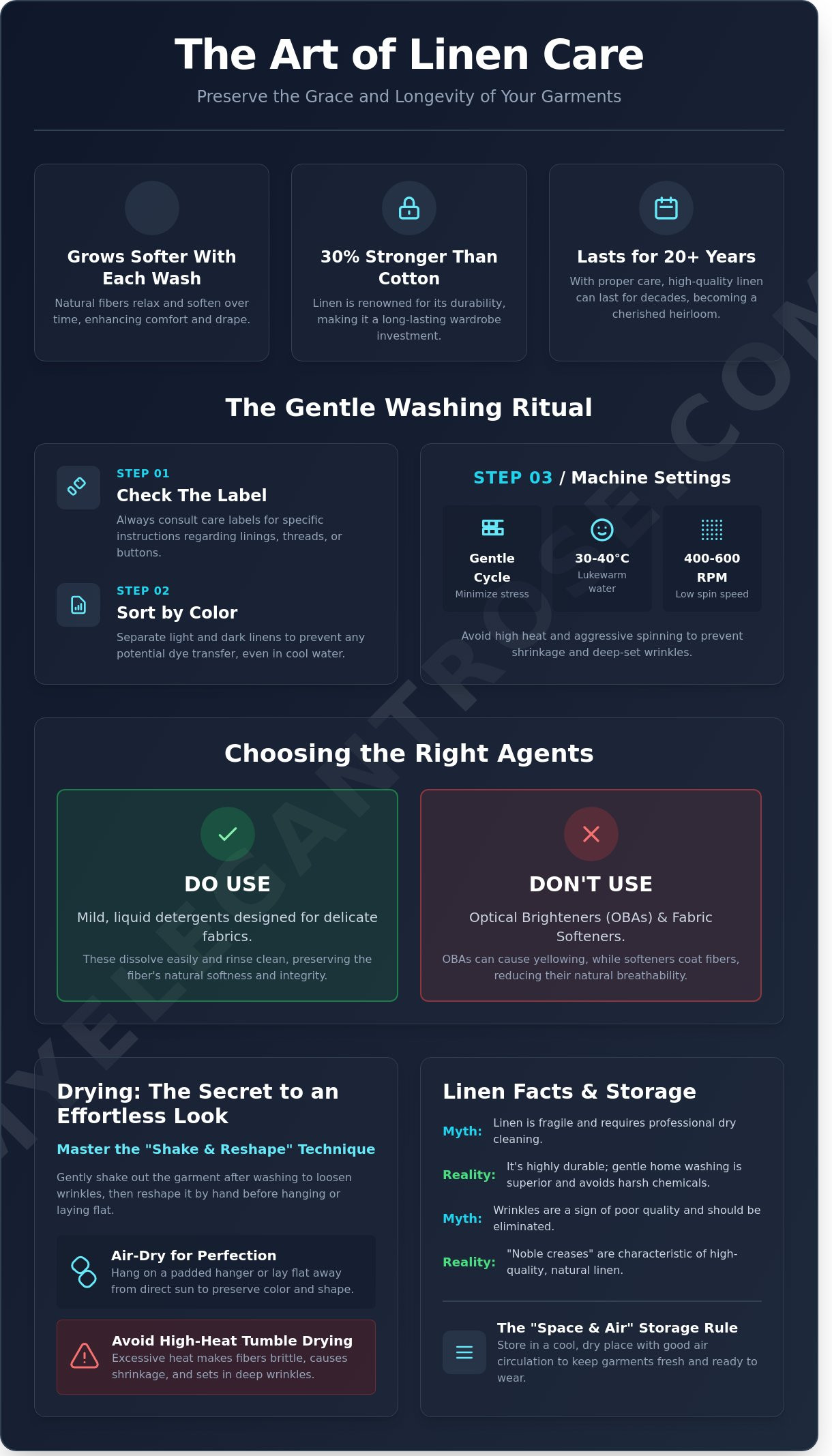
Understanding how to care for linen clothing begins with a respect for the fabric's natural origin. It's a resilient material, yet it thrives under a gentle touch. Before you begin the washing process, always consult the care label. Many high-quality garments feature intricate linings, silk threads, or mother-of-pearl buttons that require specific handling. Ignoring these details can lead to damaged finishes or unexpected shrinkage.
Sorting is the next vital step in your laundry ritual. Separate your linens by color to maintain their original vibrancy. Mixing a crisp white blouse with deep earthy tones like terracotta or indigo is a risk; even in cool water, dye transfer can occur. To keep your pieces looking pristine, wash light and dark items in separate loads.
When using a washing machine, select a gentle cycle. The key is to minimize mechanical stress. Set your spin speed to a low setting, ideally between 400 and 600 RPM. High spin speeds compress the fibers and create deep, stubborn wrinkles that are difficult to remove. Keep the water temperature between 30°C and 40°C. Water exceeding this range can cause the flax fibers to contract, resulting in a garment that feels tight or lose its graceful drape.
Choosing the Right Detergent
The choice of soap is a defining factor in how to care for linen clothing over the long term. Avoid any detergents containing "Optical Brightening Agents" or OBAs. While these chemicals make whites appear brighter by reflecting light, they're harsh on natural fibers and can cause premature yellowing or brittleness. Instead, opt for mild, liquid soaps designed for delicates. These dissolve easily and rinse away without leaving a gritty residue. Skip the fabric softeners entirely. They coat the flax fibers in a waxy film, which reduces the fabric's natural breathability and can leave your clothes looking dull and lifeless.
Hand Washing vs. Machine Washing
For your most cherished pieces, such as linen dresses with delicate embroidery or thin straps, hand washing is the safest path. Simply submerge the garment in a clean basin of lukewarm water with a small amount of mild soap. Swish it gently for two minutes, then rinse thoroughly. If you prefer the convenience of a machine, always use a mesh laundry bag. This protective layer prevents ties, buttons, and lace from snagging on the drum or other clothes.
The most important rule for machine washing is to give your clothes room to breathe. Never overload the drum. For the best results, fill the machine to only 50% capacity. Linen is highly absorbent and becomes quite heavy when wet. Providing extra space ensures the water and soap can move freely through the fabric, preventing the heavy friction that leads to pilling. By treating the washing process with this level of care, you ensure each piece remains a staple of your wardrobe for years to come. You might find that our latest linen arrivals become even softer and more beautiful with every thoughtful wash.
Drying and Mastering the Effortless Look
Linen is resilient, yet it demands a gentle touch after the wash. You should avoid the tumble dryer at all costs. High heat is the primary enemy of natural fibers, often causing garments to shrink by as much as 10% in just one cycle. This intense heat also makes the fibers brittle, which leads to premature fraying along the seams. Instead, embrace the soft air to preserve the integrity of your pieces. Understanding how to care for linen clothing during the drying phase is what separates a garment that lasts two years from one that lasts twenty.
Once your wash cycle finishes, remove your items immediately. Give each piece a firm snap in the air. This "shake" helps release deep set wrinkles before they dry into the fabric. If you're drying darker shades like navy or charcoal, always find a spot in the shade. Direct sunlight can bleach dark linen by 15% in under four hours of exposure, stripping away the rich depth of the dye. For those mornings when you're in a rush, the steamy bathroom trick is your best friend. Hanging your linen piece near the shower for 15 minutes allows the ambient moisture to relax approximately 60% of visible creases, giving you a refreshed look without the effort.
The Reshaping Ritual
Reshaping is the manual smoothing of seams and edges while the garment is still damp to ensure it retains its original silhouette. For lightweight blouses and summer dresses, use a padded hanger to avoid the sharp "shoulder peaks" that plastic hangers create. Heavier linen knits or thick linen sets require a different approach. Lay these items flat on a white towel to prevent the weight of the water from stretching the hem. This simple step ensures your clothes maintain their graceful flow and tailored fit for years.
To Iron or Not to Iron?
Embracing the natural, relaxed texture of linen is a sign of high-quality fabric and a confident, effortless style. These soft ripples are part of the material's character. However, if you prefer a crisp finish for a formal event, timing is everything. Iron your linen while it's still slightly damp to the touch. Use a medium-hot setting, typically around 150 degrees Celsius, to glide over the fabric easily. For dark linens, always use a pressing cloth or iron on the reverse side. This prevents the iron from creating a "shiny" patch on the surface, keeping the finish matte and sophisticated. Learning how to care for linen clothing with these small adjustments will keep your wardrobe looking timeless and refined.
Stain Removal and Seasonal Protection
Preserving the soft beauty of your garments requires a gentle touch and a swift response. When a spill occurs, your first instinct should be grace, not panic. Blot the area immediately with a clean, white cloth to lift the liquid. Don't rub the fabric. Rubbing pushes the pigment deep into the flax fibers, which makes removal 40% more difficult once the stain sets. If you act within 10 minutes, most common spills won't become permanent marks on your favorite pieces.
Bleach is the natural enemy of linen. The harsh chlorine weakens the organic cellulose fibers, leading to yellowing and premature thinning of the weave. It's a chemical process that strips the fabric of its inherent strength. Instead, opt for an oxygen-based whitener or a simple soak in lemon juice and sunshine. This natural approach honors the fabric's integrity while keeping your whites luminous and fresh. Understanding these nuances is a vital part of how to care for linen clothing effectively.
Natural Spot Treatment Methods
For a red wine spill, apply club soda and a generous layer of salt to lift the color. Let it sit for 15 minutes before rinsing with cool water. If you encounter an oil-based mark, baking soda works wonders by absorbing the grease before it bonds with the fibers. For grass stains, a mixture of one part white vinegar to two parts water provides a safe, effective solution. If a stain persists on a delicate light-colored blazer after two gentle attempts, consult a professional cleaner who specializes in natural textiles to avoid permanent damage.
Preparing for Hibernation
When the season shifts, prepare your wardrobe for its rest with a thoughtful routine. Ensure every piece is 100% dry; even 5% residual moisture can invite mildew during three months of storage. Avoid plastic bins or dry-cleaning bags. These trap heat and moisture, causing fibers to become brittle over time. Instead, wrap your items in acid-free tissue paper or place them in breathable cotton garment bags. Tossing a few cedar blocks or dried lavender sachets into your storage chest will keep moths away naturally. This careful preparation is key to how to care for linen clothing so it remains pristine for the next spring bloom.
Discover our collection of timeless linen dresses designed for effortless beauty and lasting quality.
Storing Your Collection for Lasting Grace
Linen thrives when it has room to breathe. Unlike synthetic fabrics that can be packed tightly, linen is a living, organic material that requires circulation to maintain its integrity. The "Space and Air" rule is a fundamental principle for any curated closet. It suggests leaving at least 1.5 inches of space between each hanger. This gap prevents the fabric from being crushed and allows air to flow freely. Since linen can absorb up to 20% of its weight in moisture before feeling damp, proper airflow is essential to prevent fibers from becoming brittle or developing a musty scent.
Choosing the right support for your garments is a vital step in understanding how to care for linen clothing. For structured pieces like blazers or heavy linen dresses, avoid thin wire hangers at all costs. These can permanently distort the shoulder line, creating unsightly "peaks" in the fabric. Instead, opt for wide wooden hangers or silk-padded versions. These tools distribute the weight of the garment evenly, preserving the original silhouette for years. When it comes to trousers and skirts, folding is often the superior choice. Use a "soft roll" technique or fold them into thirds to avoid the deep-set vertical creases that occur when items are hung by clips for long periods.
Curating a Low-Stress Closet
An organized closet is the foundation of a peaceful morning routine. When your storage is intentional, you significantly reduce the need for frequent pressing and steaming. Rotating your collection is a secret to longevity that many overlook. Giving a garment a 48-hour rest between wears allows the flax fibers to naturally shed wrinkles and return to their original shape. This mindful approach integrates perfectly into a minimalist fashion framework. By focusing on a smaller number of high-quality pieces, you can give each item the individual care and space it deserves to shine.
Final Tips for the Elegant Rose Woman
Our "Gentle Care" mantra is a philosophy that extends beyond the laundry room. It's about treating your wardrobe with the same respect you give to yourself. When you master how to care for linen clothing, you aren't just cleaning fabric; you're preserving a legacy of style. Research shows that well-maintained linen can last for over 30 years, becoming softer and more luminous with every passing decade. This is an investment in a sustainable future where quality triumphs over the disposable nature of modern trends.
Embrace the soft, natural texture of your linen as a mark of authenticity and grace. See every wash and every careful fold as an act of mindfulness. We invite you to explore our new arrivals to find the next timeless piece that will move beautifully with you through every season of life. Your journey toward a more poised and effortless wardrobe begins with these small, intentional steps.
Embrace the Lasting Grace of Your Linen Collection
Mastering the art of how to care for linen clothing transforms a simple garment into a lifelong companion. By choosing gentle, pH-neutral detergents and opting for air-drying, you protect the 100% natural flax fibers that give linen its signature strength. Research from textile experts suggests that well-maintained linen can last for over 20 years. Because flax fibers are approximately 30% stronger than cotton, your favorite pieces are built to endure decades of wear. Each wash actually improves the fabric; it breaks down the natural pectin to make the silhouette softer and more supple against your skin.
Your wardrobe should be a sanctuary of comfort and quiet luxury. Our pieces are crafted from premium flax fibers designed for longevity. We focus on timeless silhouettes that soften with every wash, offering graceful designs for the modern, poised woman. When you treat your linens with respect, they reward you with a lifetime of effortless beauty. You'll find that these pieces don't just sit in your closet; they grow more beautiful as they age.
Explore our latest collection of effortless Linen Wear
Enjoy the serene confidence that comes with wearing clothes that are designed to move beautifully with you through every season.
Frequently Asked Questions
Can I put 100% linen in the washing machine?
Yes, you can wash 100% linen in a machine using a gentle cycle and cold water below 30 degrees Celsius. It's best to use a mild detergent and set your machine to a low spin speed, ideally between 400 and 600 RPM. This prevents the natural fibers from breaking or becoming overly distorted during the cycle. Your garments will emerge with a soft, lived-in feel that maintains their graceful silhouette.
How do I stop my linen clothes from shrinking?
To prevent shrinkage, always wash your pieces in cool water and avoid the high heat of a tumble dryer. Learning how to care for linen clothing properly involves keeping temperatures below 30 degrees Celsius, as heat is the primary cause of fiber contraction. Linen can shrink by 3% to 4% during its first few washes if exposed to extreme heat. Instead, air dry your items flat to preserve their original shape.
What is the best way to soften stiff linen clothing?
The most effective way to soften stiff linen is simply to wear and wash it regularly. Linen fibers naturally become more supple and soft after 3 to 5 wash cycles. For an immediate result, add 1/2 cup of baking soda to your wash cycle or soak the garment in a solution of water and mild detergent for 12 hours. This process gently breaks down the pectin in the flax fibers, resulting in a beautiful drape.
Is it better to hang or fold linen garments in the closet?
Folding is the superior choice for heavy linen knits to prevent stretching, while lightweight dresses benefit from hanging on wide, padded hangers. Use hangers that are at least 1 inch thick to avoid leaving sharp marks in the shoulder area. If you choose to fold, store your pieces in a cool, dry place to prevent moisture buildup. This thoughtful approach ensures your wardrobe remains timeless and ready for any occasion.
Do I really need to iron linen every time I wear it?
You don't need to iron linen every time, as the natural creases are a signature of its effortless elegance. If you prefer a smoother look, use a steamer for 5 to 10 minutes while the garment is hanging. For a crisp finish, iron the fabric while it's still about 10% damp using a medium-high heat setting. This method allows the iron to glide easily without damaging the delicate flax fibers.
What should I do if my linen dress gets a yellow stain?
Treat yellow stains immediately by applying a mixture of 2 tablespoons of lemon juice and 1 tablespoon of salt to the area. Let the garment sit in direct sunlight for 30 minutes before rinsing with cool water. Avoid chlorine bleach at all costs, as it reacts poorly with flax and can cause 100% of the treated area to turn permanently yellow. This natural remedy restores the bright, clean look of your favorite pieces.
Can I use white vinegar as a natural fabric softener for linen?
Yes, adding 1/2 cup of distilled white vinegar to the rinse cycle is a wonderful way to soften the fabric naturally. It helps dissolve soap residue that often makes fibers feel stiff or scratchy. When you're mastering how to care for linen clothing, this simple addition provides a gentle alternative to chemical softeners. The vinegar scent disappears completely once the fabric is dry, leaving behind only a soft, breathable texture.
How often should I wash my linen pieces?
You should wash your linen garments every 3 to 4 wears unless they're visibly soiled. Because linen is naturally antibacterial and moisture-wicking, it stays fresh longer than synthetic fabrics. Between wears, let your clothes air out for at least 24 hours on a hanger to release light wrinkles and odors. This infrequent washing schedule preserves the integrity of the fibers and helps your elegant wardrobe last for many years.